
Across oil and gas production basins, the pneumatic process controller is one of the most overlooked pieces of equipment on a well pad. It opens and closes valves. It maintains levels and pressures. It keeps the production process moving. And it usually runs on compressed air or gas, which means it needs a reliable supply of that air or gas to function.
On newer or more developed production sites, that supply is not typically a problem. Legacy sites are a different story.
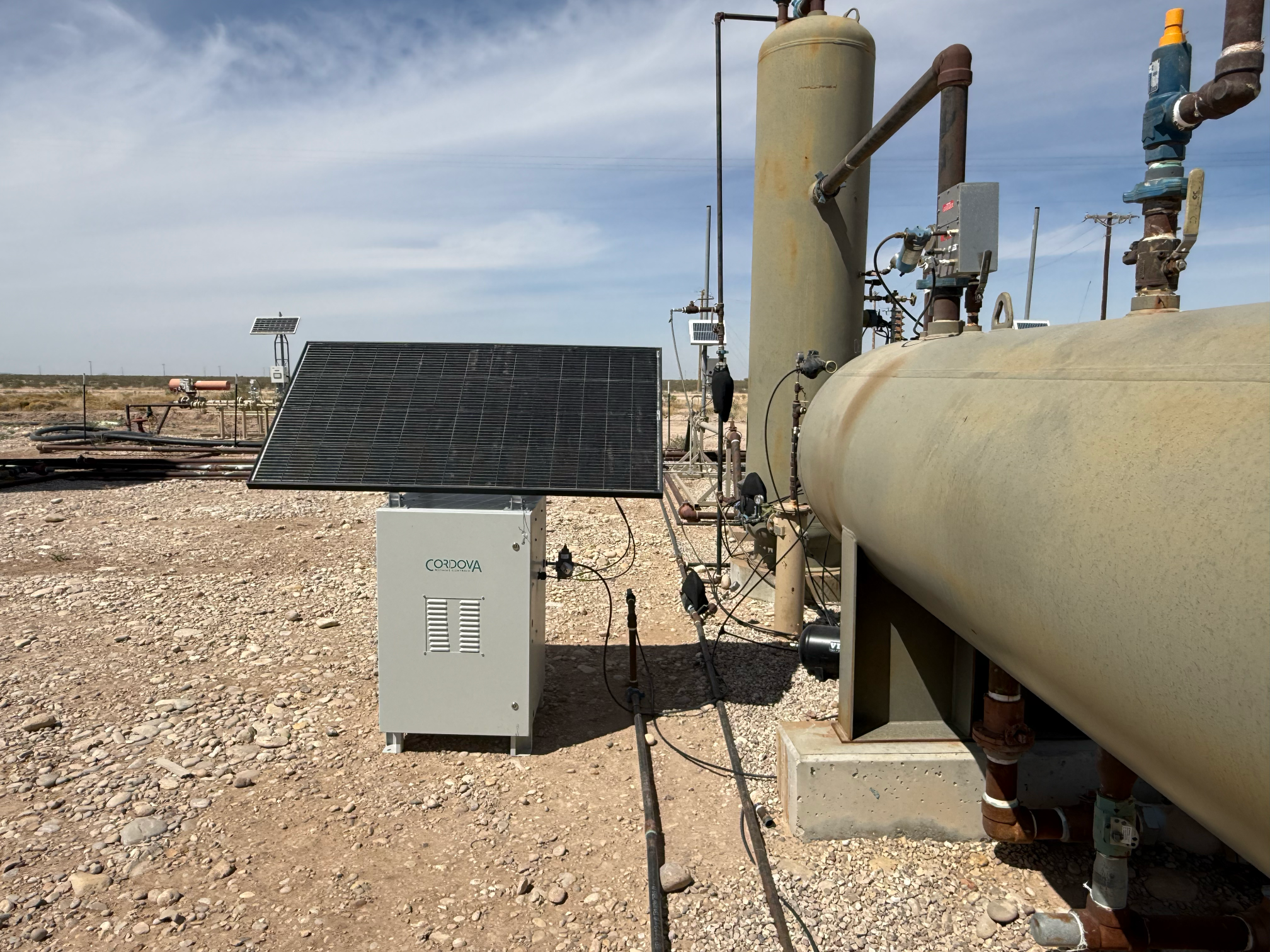
The SolarHawk was designed specifically for the sites where reliable, compressed air is hardest to come by. As it turns out, that is not a small number of locations across U.S. basins.
The Problem: Legacy Sites Were Not Built for Modern Air Demands
Pneumatic process controllers are the workhorses of upstream production equipment, and many legacy production sites still rely on instrument gas that is pulled directly from the production stream to drive the production equipment’s pneumatic devices. This approach works until it does not. Gas-driven pneumatics bleed intermittently and, in some cases, continuously, releasing methane after every actuation cycle or even constantly. With regulatory attention to pneumatic device emissions increasing across producing basins, the gas-powered approach carries growing compliance risk. While most newer wells have addressed this problem, the legacy wells are next in line.
The alternatives, using grid power to supply an air compressor or utilizing a natural-gas-driven air compressor, are often not economically practical at remote sites. Even using nitrogen to address the issue is a forever cost for the life of the well. Infrastructure costs are high and legacy well economics rarely justify a major capital installation just to keep a few controllers running.
This is the gap the SolarHawk fills.
Upstream Applications: Process Equipment and Production Controllers
In upstream oil and gas, the most direct application for the SolarHawk is replacing instrument gas supply to pneumatic process controllers at well pads that are without reliable power infrastructure.
A single SolarHawk unit can provide compressed air to the pneumatic controllers managing a timed wellhead valve, separator, line heater or storage tank heater, the same devices that would otherwise draw from the production gas stream. Compressed air for process controllers at legacy sites that are battling H2S can be another solution. Because the SolarHawk operates on solar power, it requires no grid connection and no fuel supply. The unit is sized for continuous operation, including on consecutive cloudy days, and optional heaters are available for cold-weather producing regions.
For operators managing inventories of legacy wells, this matters at scale. Replacing instrument gas across a large number of sites is a significant undertaking when each site requires a separate infrastructure solution. A self-contained, solar-powered compressed air unit changes the equation. Installation is straightforward and does not require specialized crews or extended downtime.
The SolarHawk also addresses compliance directly. For operators working toward emissions reductions or navigating state-level pneumatic device requirements, that is a meaningful operational shift.
Midstream Applications: Remote Pipeline Equipment
The midstream application is less widely recognized but equally practical, and it represents a segment that has not historically been a target audience for solar-powered compressed air solutions.
Transmission and gathering operators manage long runs of pipelines, often crossing terrain where there is no nearby facility or power infrastructure. At intervals along those pipelines, various stranded equipment such as a dehydrator, line heater or pipeline control valve may be used to help with the transmission of the gas.
This equipment most likely needs a pneumatic supply to function. On a remote stretch of pipeline with no facility in the area, converting process controllers to instrument air can be challenging. Until now, options have been limited: continue to use natural gas to operate and live with the associated emissions, switch to nitrogen and live with the associated forever costs or invest in infrastructure that the economics simply cannot justify.
For many of those situations, the SolarHawk is a solution. If the process controllers are intermittent and do not exhaust at a rate that exceeds what the SolarHawk can supply, the unit can serve as a standalone compressed air source for the pneumatic controllers.
For midstream operators, the value proposition is direct. A self-powered compressed air source at a remote process site can eliminate the instrument gas exhaust, reduce emissions at an otherwise difficult-to-control location and remove the need for a separate power supply.
A first step for midstream operators is to inventory process controller types and bleed rates across their process locations and identify where a solar-powered compressed air source is viable.
SolarHawk: A Practical Solution Across Upstream and Midstream
The common thread between potential upstream and midstream applications for SolarHawk is the same condition that makes legacy sites difficult to serve in the first place: distance from infrastructure.
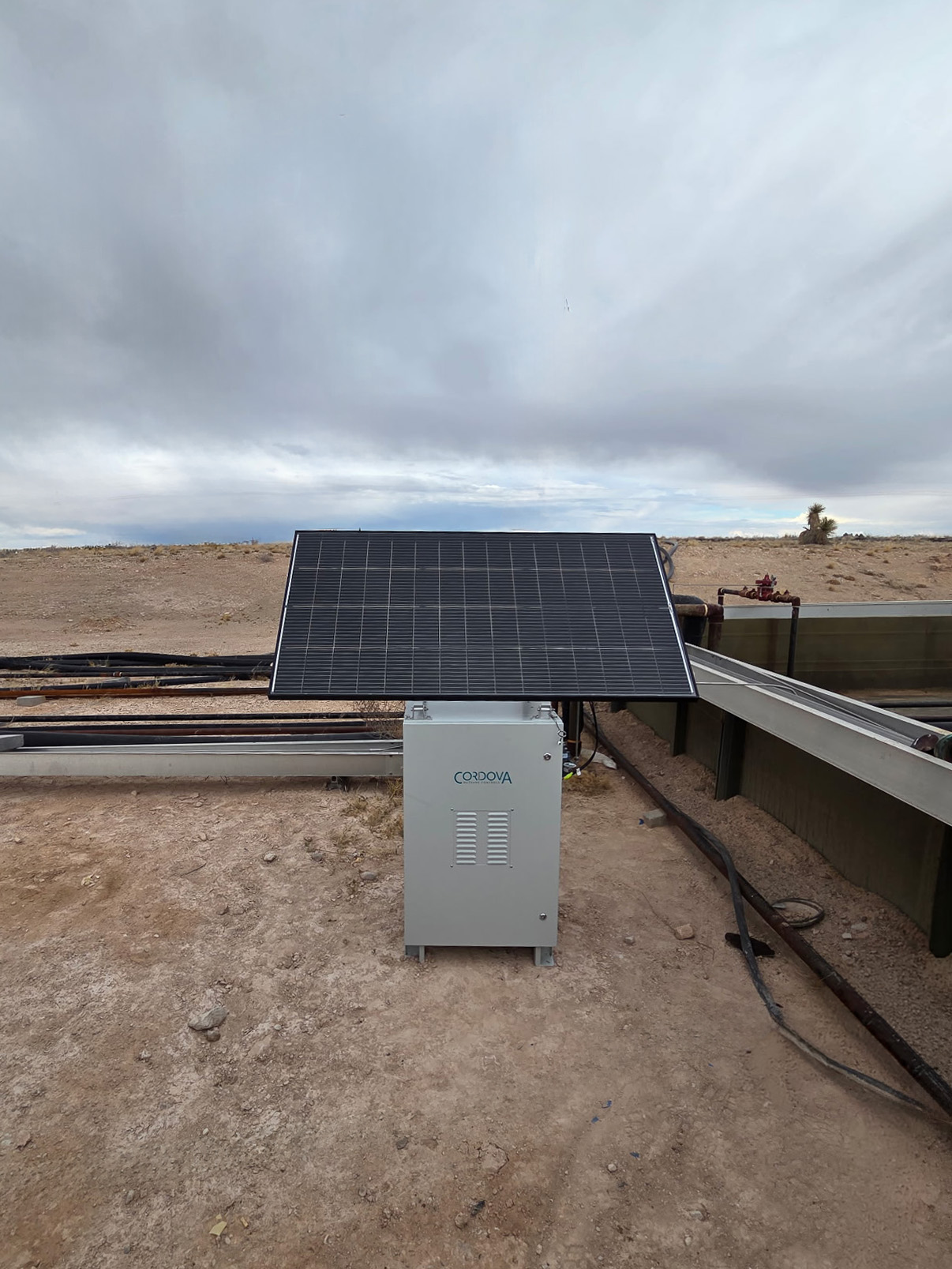
The SolarHawk was built around that constraint. It requires no grid connection, no instrument gas supply and no ongoing fuel or compressed gas delivery. Each unit includes auto-drain capability for water removal, which matters in field conditions where manual maintenance visits are infrequent. Cold-climate models with internal heaters also address one of the practical obstacles that has historically limited solar equipment adoption in northern producing regions.
Both segments are dealing with the same underlying pressure: reduce methane emissions from pneumatic sources, manage the compliance requirements that are building around those sources and do it without infrastructure investments that require capital spends.
The SolarHawk addresses that problem with a unit that operates independently, installs without specialized support and runs without ongoing fuel or power costs.
To learn more or request a quote, visit cordovamcs.com/solarhawk or contact the Cordova Methane Controls team directly.