Across oil and gas production sites, process heaters, combustors and other production equipment with unlit burners are a familiar sight and rarely treated as urgent. The pilot blew out. It’ll get relighted on the next site visit. It happens.
What gets far less attention is what’s happening in the time between when that flame goes out and when someone arrives to relight it. During that window, the main burner gas doesn’t stop flowing. It just stops burning. Every cubic foot of unignited gas escaping into the atmosphere is both a direct economic loss and a methane emission event, the kind that regulators are increasingly equipped to detect and act on.
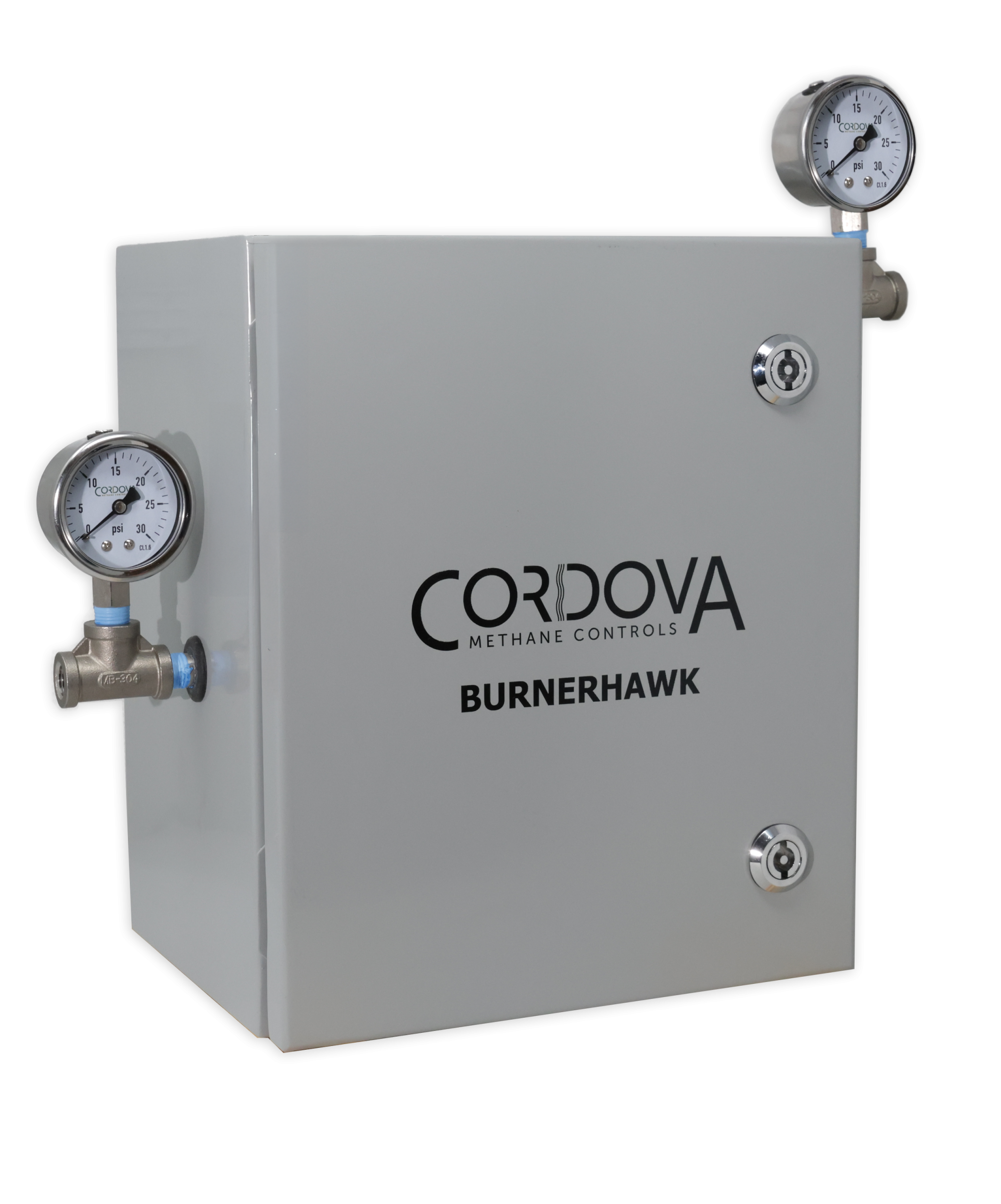
The BurnerHawk from Cordova Methane Controls was built to close that window entirely.
The Problem: Pilot Flame Failure Is More Common Than You Think
To understand why the BurnerHawk matters, it helps to understand what a process heater is actually doing on a production site.
Oil and gas production equipment; separators, treaters and line heaters, to name a few, use process heaters to maintain the temperatures necessary to keep production flowing. These heaters rely on a pilot flame to ignite the main burner. The pilot is a small, continuously burning flame, and as long as it’s lit, the main burner operates normally and combusts its gas supply.
The problem starts when the pilot goes out.
Pilot flame failure has a handful of common causes: a frozen or plugged burner orifice, wet gas in the fuel supply, strong wind at the wrong moment or a pressure fluctuation in the gas line. None of these are unusual field conditions. On a well operating in winter weather, or in an area with inconsistent gas quality, pilot outages can happen regularly.
When the pilot flame fails on a site without a burner management system (BMS), often legacy wells in remote areas, nothing automatically happens in response. The main burner valve stays open. Gas continues flowing, and without an ignition source, that gas doesn’t combust, it vents to atmosphere as raw methane.
On remote legacy wells, where site visits may happen every few days or weeks rather than every few hours, that uncontrolled release can continue for an extended period before anyone realizes the burner is out.
Methane Release Data in Real Numbers
The volume of gas released during a pilot flame failure depends on the size of the burner. On the smaller end, a burner running unlit can release approximately 6 MCF (thousand cubic feet) of gas per day. On a larger main burner, that figure climbs to 50 MCF per day or more.
With natural gas currently trading around $3 per MCF, here’s what that looks like in practice:
| Burner Size | Daily Release | Cost Per Day | Cost Over 4 Days |
|---|---|---|---|
| Small | 6 MCF | $18 | $72 |
| Large | 50 MCF | $150 | $600 |
At the large end, over a 2-week period, an undetected main burner failure can represent gas losses equal to the cost of a BurnerHawk itself, before any regulatory consequences are considered.
Beyond the economics, the gas released is methane, a greenhouse gas roughly 80 times more potent than carbon dioxide over a 20-year period. What looks like a minor equipment issue at an individual site adds up to a measurable emissions problem across a field or a fleet of wells.
How the BurnerHawk Works
The BurnerHawk is a patented pilot and main burner closure system. Its job is straightforward: continuously monitor the pilot flame and automatically shut off the gas supply if that flame is lost.
Here’s the sequence of events when a pilot failure occurs on a site equipped with a BurnerHawk:
Step 1 — The pilot flame is monitored in real time.
The BurnerHawk watches for the presence of the pilot flame continuously during operation. It doesn’t rely on scheduled checks or manual inspection.
Step 2 — The pilot flame is extinguished.
A frozen orifice, wet gas or wind the cause doesn’t matter. The flame goes out.
Step 3 — The BurnerHawk responds automatically.
Upon detecting pilot flame loss, the system closes both the pilot gas supply and the main burner gas supply. Gas stops flowing. The release is stopped at the source.
Step 4 — Optional: Alarm and shut-in.
The BurnerHawk is also capable of triggering an alarm and initiating a production equipment shut-in, so your
team knows what happened and where.
No human intervention is required to prevent the emission event. By the time someone arrives for the next site visit, the BurnerHawk has already done its job.
What Makes the BurnerHawk Practical for Legacy Wells
This is where the engineering decisions behind the BurnerHawk matter as much as the concept.
Many of the wells where pilot flame failure is most likely to go undetected are legacy wells, older assets in remote locations that weren’t originally built with modern BMS infrastructure. Adding a grid-powered or solar-powered monitoring system to these sites often isn’t economically viable, and the installation complexity can cause even well-intentioned compliance upgrades stall out.
The BurnerHawk was designed around those constraints:
- No grid or solar power required.
The BurnerHawk operates entirely without external power. That removes the single biggest infrastructure barrier for remote and legacy sites. - No electronics.
The system uses mechanical operation, which means there’s nothing to program, no firmware to update and no connectivity requirement. - One-hour installation.
The BurnerHawk can be installed by producer personnel without specialized support. For operators managing large inventories of legacy wells, that scalability matters enormously.
It also has an optional fire suppression add-on: a foam deployment system that can extinguish an existing fire at the process heater before it becomes a catastrophic loss event. For operators in remote areas where emergency response time is measured in hours, that capability is worth noting.
See the BurnerHawk in the Field
We recently put together a video walkthrough showing how the BurnerHawk is installed on a production site. If you are evaluating the BurnerHawk for your inventory and want to see what the process looks like. Check out the video.
The Methane Regulatory Context
Aerial and satellite-based detection technology has made it possible to identify significant release events at individual sites, and the EPA’s evolving methane rules, along with state-level programs across producing basins, have created an environment where uncontrolled releases carry real risks.
Pilot flame failure events are among the most detectable types of methane releases, producing a sustained emissions signature that monitoring technology is specifically calibrated to find. Operators whose sites are detected during a burner failure event may find themselves subject to inspection, notice of violation or super-emitter designation, all of which carry costs that far exceed the price of prevention.
The BurnerHawk directly targets this risk. It doesn’t require an infrastructure upgrade. It doesn’t demand ongoing power or connectivity. It is easily installed in an afternoon and then operates continuously, site after site, without ongoing intervention.
For E&P operators managing legacy assets and looking for practical, scalable methane control, BurnerHawk is exactly the tool they needed.
To learn more or request a quote, visit cordovamcs.com/burnerhawk or contact the Cordova Methane Controls team directly.